
26 Apr To end gender-based violence we need bold thinking, true accountability, and survivor’s voices
Abida Pehlic, GMMP coordinator for Central and Eastern Europe and Bosnia and Herzegovina, reflects on the 70th session of the Commission on the Status of Women (CSW70) where she was a member of the WACC/GMMP delegation.
This year, I had the privilege of being one of more than 4,600 civil society participants from across the world at CSW70. I felt both honoured and deeply responsible to bring the voice and experience of Bosnia and Herzegovina into this global space.
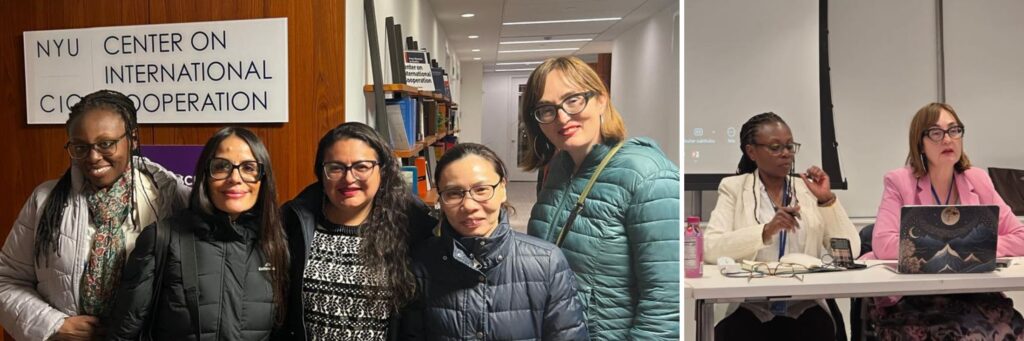
One of the highlights of my time at CSW70 was speaking at the side event “Justice and Ending Gender Violence in Offline and Digital Media,” organised by WACC and partners.
I participated in my capacity as the regional coordinator for Central and Eastern Europe within the Global Media Monitoring Project, where I had the opportunity to share key highlights from the latest GMMP findings for Europe. In particular, I focused on the persistent gaps in media coverage of gender-based violence, as well as the ways in which reporting often reinforces harmful stereotypes and victim-blaming narratives.
At the same time, I brought forward the specific challenges we face in my home country of Bosnia and Herzegovina, where media reporting on gender-based violence, especially in digital contexts such as non-consensual intimate image abuse, remains problematic. Issues such as sensationalism, lack of survivor-centred reporting, and insufficient understanding of digital violence continue to shape public perception and, ultimately, survivors’ access to justice.
Sharing these realities was both powerful and necessary. It was also a moment of connection, realising that while our contexts differ, many of the challenges are deeply shared across regions.
Beyond this event, I attended a number of discussions that left a strong impression on me. A recurring theme was the need to rethink justice itself. At the session “From Punishment to Power,” feminist practitioners challenged the idea that punitive systems alone can deliver justice for survivors. This resonated strongly with our work at my organisation Novi put, where we see every day how legal processes can be inaccessible, slow, or even harmful for survivors.
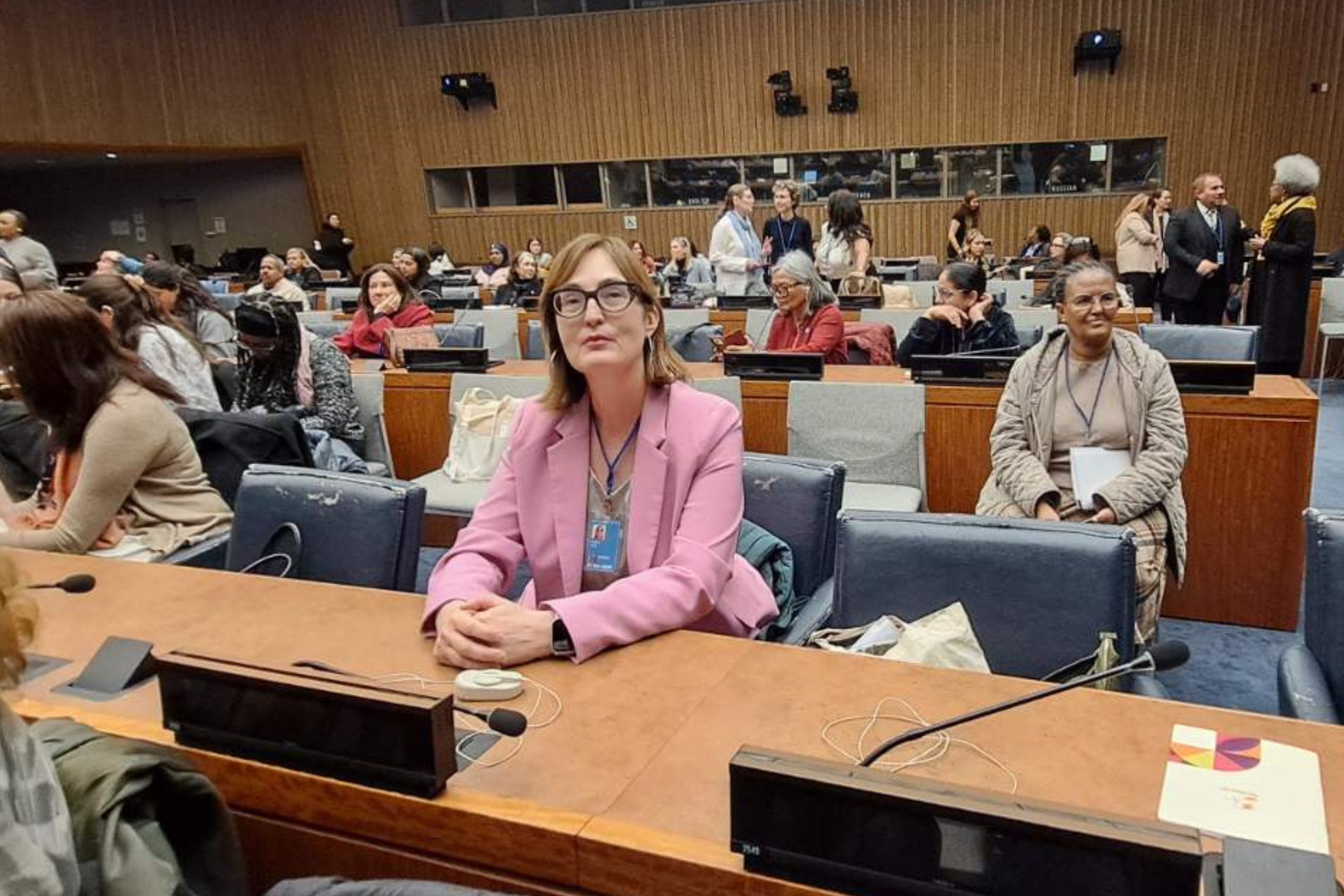
I also had the opportunity to participate in the Civil Society Briefing on the UN80 reform process at the United Nations, held in the framework of CSW. The session featured important insights from Sima Bahous of UN Women and Guy Ryder, who both emphasised the ongoing efforts to strengthen the effectiveness, inclusivity, and accountability of the UN system.
The discussion strongly reaffirmed the essential role of civil society in shaping these reforms, particularly in ensuring that global commitments translate into meaningful change on the ground.
For organisations like Novi put, this is highly relevant. Our daily work on providing direct support to women and girls, especially survivors of violence and exploitation, while advocating for systemic improvements, demonstrates how local realities must inform global processes.
Participating in this dialogue reinforced the importance of maintaining strong connections between grassroots experience and international policymaking, ensuring that the voices of those most affected remain central to reform efforts.
Another important takeaway came from discussions on holistic empowerment. Events like “Changing Narratives – From Survival to Leadership” reinforced the importance of integrated approaches, combining legal reform, education, economic empowerment, and community engagement. This aligns closely with our experience that supporting survivors requires much more than one-dimensional solutions.
I was also particularly inspired by conversations around survivor leadership and community-based responses, including in the session “Ending Trafficking Together.” It was a powerful reminder that survivors are not only beneficiaries of support but also key actors in shaping effective solutions. This is something we actively strive to strengthen in our own work.
At the same time, CSW70 was not only about learning – it was equally about sharing. Through formal discussions and informal conversations, I had the opportunity to exchange experiences, methodologies, and good practices with colleagues from different parts of the world. These connections are invaluable, and I look forward to building on them in the months ahead.
While the challenges are immense, we are part of a global movement that is resilient, connected, and determined.
— Abida Pehlic, GMMP Central and Eastern Europe coordinator
What I take back with me to Mostar is both inspiration and a renewed sense of urgency. The discussions reaffirmed that ending gender-based violence, especially in digital and media spaces, requires bold thinking, stronger accountability of institutions and platforms, and a clear commitment to centring survivors’ experiences.
For Novi put, this experience will directly inform how we continue to strengthen our work: improving support services, advocating for more effective institutional responses, and pushing for greater accountability in media and digital spaces. At the same time, it reinforces the importance of prevention, awareness-raising, and challenging harmful social norms that continue to silence survivors.
CSW70 reminded me that while the challenges are immense, we are part of a global movement that is resilient, connected, and determined. And that, perhaps, is the most powerful takeaway of all.
Abida Pehlic is president of Novi put, a grassroots NGO in Bosnia and Herzegovina working to prevent human trafficking, violence against women and girls, and online and offline child abuse.
Top image: Abida Pehlic at the CSW70 civil society briefing on UN 80 reforms. Courtesy of Abida Pehlic.
Middle: (l) Panelists from the WACC parallel event during CSW70. (r) Presenting during the “Justice and Ending Gender Violence in Offline and Digital Media” event. WACC/GAMAG
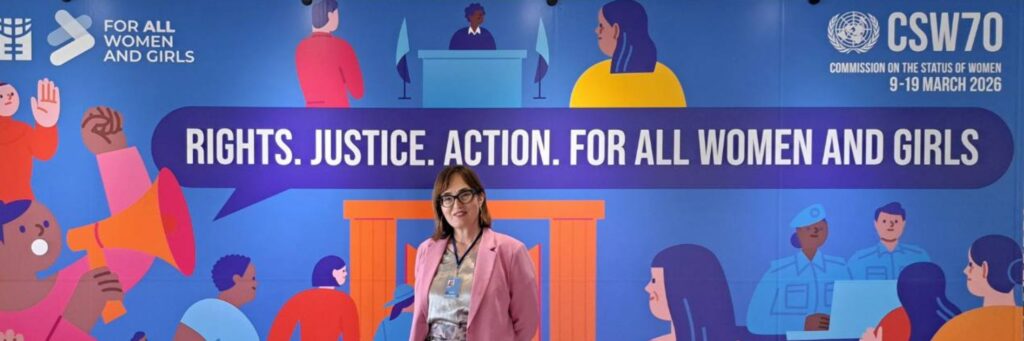
Bottom: At UN headquarters in New York City. Courtesy of Abida Pehlic.


 English
  Spanish
Sorry, the comment form is closed at this time.